Monday, 9 May 2011

Failing Forward

What’s up KD! I hope this blog finds you well. It’s been a while – I have been meaning to get this blog out, but I have been swamped.

This month’s blog is about failure… Well, at least, it’s about how to fail forward. Failing Forward is the title of a book from John Maxwell, whom you know is a favorite author of mine. The book talks about how people view failure incorrectly, which leads to lots of problems. In fact, the premise of the book is that there are 15 steps to failing forward. Since the book is awesome (I highly recommend it!!), I want to focus on the steps Maxwell states we need to take to fail forward.

I don’t know where each of you are in your career’s, but thanks to my experience in the MBA program, I am in the process of making a career change – from Education to Business. And while I know I have the skills and intellect to do well, the process has been an exercise in failing forward. Between the difference in communication between the fields, especially as it has to do with resumes, interviews, and jargon, it has been quite the learning experience. However, as I have continued to move forward with my plans to change careers, I have often reflected on the following 15 steps to fail forward, according to Maxwell.


  1. Realize there is one major difference between average and achieving people.

  2. Learn a new definition of failure.

  3. Remove the “you” from failure.

  4. Take action and reduce your fear.

  5. Change your response to failure by accepting responsibility.

  6. Don’t let the failure from outside get inside you.

  7. Say good-bye to yesterday.

  8. Change yourself, and the world changes.

  9. Get over yourself and start giving yourself.

  10. Find the benefit in every bad experience.

  11. If at first you do succeed, try something harder.

  12. Learn from a bad experience and make a good experience.

  13. Work on the weakness that weakens you.

  14. Understand there’s not much difference between failure and success.

  15. Get up, get over it, get going.

As KD students, either in the program, personal life, or career, you are going to have a time when you feel like you failed at something. For me, it has been various moments during this career change process, among several other things; just reflect on these 15 steps as you think about failing forward. When it comes to failure, as the great philosopher Jay-Z says, “It’s one to the next one…” For me, it has been truly helpful.

As a closing aside, I want to say thanks to Allyn Curry and the Kelley Graduate Career Services office. It has been quite a learning experience working with them so far during this career change process. I can’t imagine how lost I would be without Allyn straightening me out…

Well, KD, I hope that you think of some of these tips the next time you need to fail forward. Until next time, I’ll catch you later!!

Monday, 2 May 2011

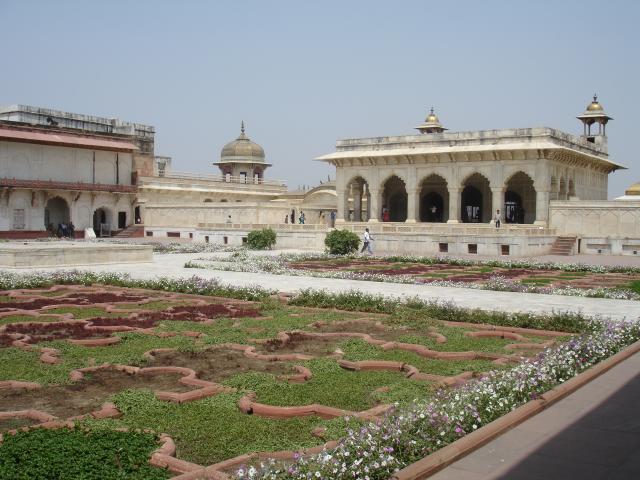
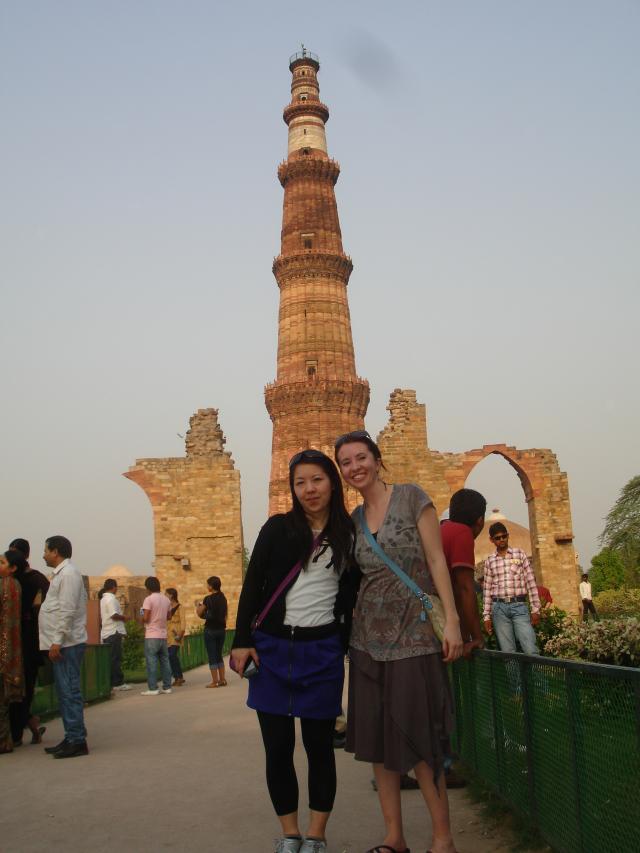
In addition to sightseeing around Delhi and Agra (including seeing the Taj Mahal!), we somehow managed to fit in several days of classroom time, company site visits, and even a case presentation. Just like an in-residence week in Bloomington, our days were packed full.

We took class and stayed at the Indian Institute of Management Lucknow in Noida. The campus was quite beautiful, and our Indian professors were exceptional. We also had numerous guest lecturers, who covered a range of topics including rural marketing, supply chain challenges, public private partnerships, cultural differences, and more. In addition, to deepen our learning experience, we spent a day touring two companies, Genpact and Maruti Suzuki, and received a unique inside look at India’s advanced auto manufacturing and service industries. Each day, we walked away from class so excited about what we learned. The opportunity to interact with prominent experts and visit Indian companies was incredible.

While our Indian classroom experience was similar to that of the US in some ways, at the same time, the cultural differences were evident. We quickly realized that actually applying our material on cultural differences was much more difficult than writing a paper on the topic. Our Indian faculty noticed the differences as well. Just as we had to adjust to a new classroom setting and different lecture styles, our professors had to adjust to our way of looking at things and our particular types of questions.

Tea times quickly became an important part of our classroom experience. Unlike the class breaks I was used to in the US, where everyone went their separate way for a few minutes to make a call or check email, in India these breaks were highly interactive. For around 30 minutes, both the professors and students engaged in conversation, using the time to build and strengthen relationships. I found this time to be very refreshing, an acknowledgment to the importance of spending time with one another.

During class, the electricity would cut out from time to time. We expected brownouts but what caught us by surprise was that our Indian professors didn’t miss a beat when the lights went off. They continued to seamlessly lecture (the computer and projector were on a back-up generator). We later joked that if something like this happened in US, half the class-time would be spent rebooting computers and getting everyone back on track. But in our Indian classroom, literally not a second of time was lost. In this, we found a lesson in flexibility and adaptability.

Just like in a US MBA program, case studies are a big part of the India curriculum, and we had to do a case analysis presentation for our final project. We found that the case was written in a different manner than what we were used to, and it took a little time to fully work through the material. In the end, our Indian professors were impressed with our work and really appreciated the fact that we approached the case differently than their Indian students. Although neither approach was superior, it reminded us that because of our culture, we see things differently.

Although we were completely exhausted at times, everything we fit into our days was necessary, as each element added so much depth to our learning experience. For example, our discussions around marketing in rural India wouldn’t have been nearly as impactful if we hadn’t seen some of India for ourselves first. The company visits emphasized that India has advanced and rapidly growing businesses, the tea times highlighted the importance of relationship building, the brownouts reminded us of the things we took for granted and the need to quickly adapt, and interactions with our Indian professors revealed that, through our cultural differences, we had a lot to learn from and teach one another.

Tuesday, 26 April 2011

From Indiana to India

I’m not even quite sure where to begin. I’ve been here 3 days now, but we have seen and experienced so much already that I feel like I’ve been here a month…in a very good way. India is amazing, and amazingly different from any place I’ve ever been before. Even though our class spent weeks prepping and learning about the country and culture, I don’t think anything could have fully prepared us…we are truly in experiential learning mode, and I wouldn’t have it any other way.


Like many others, my first real experience in India began with a cab ride. At first glance, the roads appeared to be filled with complete chaos. Cars, buses, tuk-tuks, rickshaws, horse-drawn carts, camel-drawn carts, bikes, motorcycles, people, and cows were everywhere, moving in all directions. Honking filled the air, the number of lanes changed in an instant, the few traffic lights we encountered were optional at best, people crossed the street even though there didn’t appear to be a single break in traffic, and cars switched lanes with no more than a few inches of clearance. Yes, it would have been very easy to slap a “chaotic” label on India and never look deeper. Luckily, Professor Garcia prepared us to embrace self-awareness, let go of the things we thought we knew, and embrace the fact that our way of thinking simply could not be applied to such a drastically different culture. As I stared out the window, with a large bus passing just a couple inches from my nose, I realized four things. First, I didn’t feel nervous. Second, I didn’t see a single fender-bender. Third, even though the roads were more packed with cars, animals, and people than I thought possible, traffic continued to move forward at a fairly even pace. And fourth, the constant honking wasn’t the angry New York or DC style honking I was used to – people were communicating with one another! It was a beautiful thing to watch. Everything was so fluid and responsive, as it must be when so much diversity fills a single street.


Before we left for India, Professor Garcia told us that we must be flexible, and within my first few moments of being in this new country, the word took on a whole new meaning for me. I realized that even American “flexible” was different from India “flexible”. For this week, I am a stranger in a strange land, where even the little things, like sleeping and using a hairdryer, are a challenge. But being pushed outside my comfort zone has not come without its rewards. From the delicious food to the amazingly kind people to the breathtaking sites, our first three days have been filled with rich, memorable experiences. I am overwhelmingly grateful to be here, to be experiencing this place with my fellow classmates, and to be learning simultaneously from both our Kelley and IIM Lucknow faculty and staff. It is 4am for me right now (like I said, even sleeping is a challenge), and I am anxiously waiting to see what this next day holds for us. It will be adventure, without a doubt!


Wednesday, 20 April 2011

A Global Perspective

I leave for India this Friday. And even better, I am going with a group of Kelley Direct students, faculty, and staff. I absolutely loved the two required in-residence weeks in Bloomington, and now I get to have an in-residence #3…but in a different country! I’m not quite sure what to expect, but I know it’s going to be amazing!


Kelley Direct has always been a global program in that it attracts students from all over the world, as well as integrates an international perspective into many of its classes. I have had some amazing learning experiences while interacting with classmates from India, China, Japan, and more through weekly discussion forums. But now KD is taking its global experience to a whole new level.


For this inaugural cross-cultural management class, I have spent the past 6 weeks in the KD virtual environment with 13 other students scattered throughout the country and world. Together we have explored the history of India, contemplated the effects of cultural differences on global teams, identified ways to become a more effective leader, and participated in weekly live class discussions to deepen our learning. Our professor even brought in a couple of guest speakers so that we could learn about India from an Indian and hear first-hand accounts of what it’s like to take on an expat assignment. These past 6 weeks have been enriching to say the least, and the trip to India will be our opportunity to put into practice everything we have learned up to this point.


I’ve never been to India, and I haven’t met the majority of my classmates face to face. Even so, I have absolutely no doubt that I am going to love the country and walk away with many new friends. I am ready to embark on a life-changing adventure (although I still have a lot of packing to do)!

Monday, 14 March 2011

The End Is Just The Beginning

At the end of February, I finished my MBA. In some ways, I feel completely exhausted, thinking about all the hard work, as well as the sacrifices I've had to make over the past two years. Another part of me just can't believe that I'm done with my MBA already! The two years really did fly by.


I pretty much had the perfect end to my MBA experience. It was an incredibly busy term to say the least, one of my busiest in fact - the professors certainly didn't let us off easy. We were expected to give it our all right up until the end. However, for me all the hard work culminated in a trip to the Bloomington campus to meet the incoming MBA cohort of Spring 2011. It was a bit surreal to be at IU during the last weekend of my MBA, greeting those who were just beginning their journey. And it was amazing to take a step back and reflect on all the wonderful relationships that I've made over the past two years. While time at Bloomington this time around, I saw so many friendly faces, from current students to alumni to faculty and staff, that I felt like I didn't have enough time to catch up with everyone! I also felt completely at home while strolling through the gorgeous campus, walking through the impressive halls of the business school, sharing my experiences with the incoming MBA students, and having a beer at Nick's with friends. Even though I wasn't on campus every day, I absolutely feel like I am a part of this school.


Also coinciding with the completion of my MBA was a job offer, one that has me moving halfway across the country in less than a week. There is no shortage of change going on in my life right now! Although the formal education part of my MBA is now complete, my post-MBA career is just beginning, and I am confident that going forward, my ties with Kelley will only grow stronger.

Saturday, 12 March 2011

A new experience. A new In-Residence.

I recently attended the first year In-Residence for the Spring 2011 online MBA class last month. Since I have completed both In-Residences and will graduate in May, it was a nostalgic feeling interacting with the new students during registration, orientation presentation, and the welcome dinner. Throughout the evening, I interacted with several students and answered questions they had about the school and challenges going through the program. Some questions asked were “How much study time does one need to spend per week?”, “How are the professors?”, and “What are the team like during on-line sessions?”. Those and many others were the same questions I had during my first In-Residence.

The following day I participated in the first day of course work for the first year students on a second year alumni panel. The purpose was to answer questions students might have, like the ones I mentioned above. During the Q&A, I came to the conclusion that these students are in for a unique experience. An In-Residence experience that is better than what I experienced. Kelley Direct actually renamed the In-Residences “Kelley Connect Week” to better fit this experience. These new students experienced an entirely revamped format for Kelley Connect Week. Dean Dan Smith and many other senior faculty members taught the course material throughout the week. Now, I had a wonderful experience at both my first and second year In-Residences; my point is that the Kelley School of Business KD program is constantly evolving to become better and better.


Think about your undergraduate years or educational programs at work that taught the same information every time and it made you feel like “why am I here?” Even if you requested changes to happen, you knew nothing would change. While I was watching the interaction among professors, staff, and students during the first year Kelley Connect Week last month, I could tell from my past In-Residence experience that something new and wonderful is about to happen for KD. The great thing about some of the changes I saw was the fact that my classmates and I suggested these changes only 6 months ago. It was a great feeling to see the changes we requested actually be seriously considered and implemented for future Kelley Connect Weeks. This is one reason why Kelley Direct MBA is one of the best online MBA programs and why I encourage you to consider the program.


Leonardo Kim, Second Year KD MBA student

Wednesday, 9 March 2011

Your Professional Development

What’s up KD!! It’s been a long time since we last talked. I hope that all is well. I have been swamped with work and life, but I had a minute, so I wanted to drop you a line.

This month’s blog is about great professional development resources. I was once told “You will be the same thing that you are a year from now only with the added books that you have read, knowledge you have acquired, and experiences that you have gained.” So, I, as you could probably guess, place a very high value on developing myself professionally.


I know that it may seem odd to suggestion additional resources or readings, since we are in an MBA program, but I have found a few tips that have been really helpful for me to easily incorporate into a busy life.

So, here are a few tips that I have for developing yourself professionally.


  • Pick a topic or area where you wanted to develop yourself personally or professionally.

For me, I have spent a lot of time reading management texts because I have wanted to add those resources to my professional tool kit. Since then, I have expanded other areas, and of late, my topic of choice has been related to my faith. However, independent of the topic, you have to first pick one to get started.


  • Start finding resources on your topic.

For many people, resources often mean purchasing and/or attempting to read books. However, there are tons of other resources that are out there to be used, many of which are free. Here are a few examples of things that I use.

First, I have become a lover of audiobooks and podcasts. One of my favorite podcasts is “What Great Bosses Know” by Jill Geisler from the Poynter Institute. It has great resources for supervision of staff. However, there are tons, upon tons of other free podcasts that have valuable information that you can use around just about any topic. Additionally, all of these podcasts often have small nuggets of learning that you can immediately use.

Second, start using your colleagues in your job or community. Since you know the topic you want to ask about, invite people out to a lunch interview or other meeting. Use the time to ask them questions about themselves, their job, their experiences, or other valuable knowledge. I got this idea from John Maxwell, and it has been very valuable for me, as I try to figure out my next career steps.

Finally, use social media. There are lots of people who have Facebook and Twitter accounts for communicating with friends; however, there are also tons of pieces of news and professional development from all fields that can be found in both Facebook and Twitter. In fact, I have found that Twitter has become one of my most valuable pieces of professional development because of the sheer value of information available by following the right people and/or groups.


  • Use the resources immediately.

I have found that with most professional development tools, the sooner I use them, the more likely I am to retain the information. So, find ways to immediately use the information you find, if you deem it valuable. The earlier you use it, the fresher it will be in your mind, and the more likely it will help you grow.

Well, KD, I hope that you have found these tips helpful for your professional development. I know they have been helpful for me. Until next time, I’ll catch you later!!